


Repair vs. Replace Water Heater: The 2026 Homeowner’s Decision Guide
Does that strange rumbling in your garage mean a flood is coming, or can a simple part swap save your weekend? You're likely staring at your unit right now, wondering if it's worth spending money to fix it or if you're just throwing cash away. It's a stressful choice when you're caught between rising energy bills and the fear of a catastrophic tank burst. Deciding whether to repair vs replace water heater units in Miami doesn't have to be a guessing game.
You deserve peace of mind and hot water that doesn't cut out when you need it most. We'll show you exactly when to invest in a fix and when a total replacement is the only way to protect your home. This guide breaks down the 2026 "50% Rule," the impact of South Florida's sediment-heavy hard water, and how to avoid those expensive emergency upcharges. You'll finish this article with a clear plan to keep your home dry and your showers steaming.
Key Takeaways
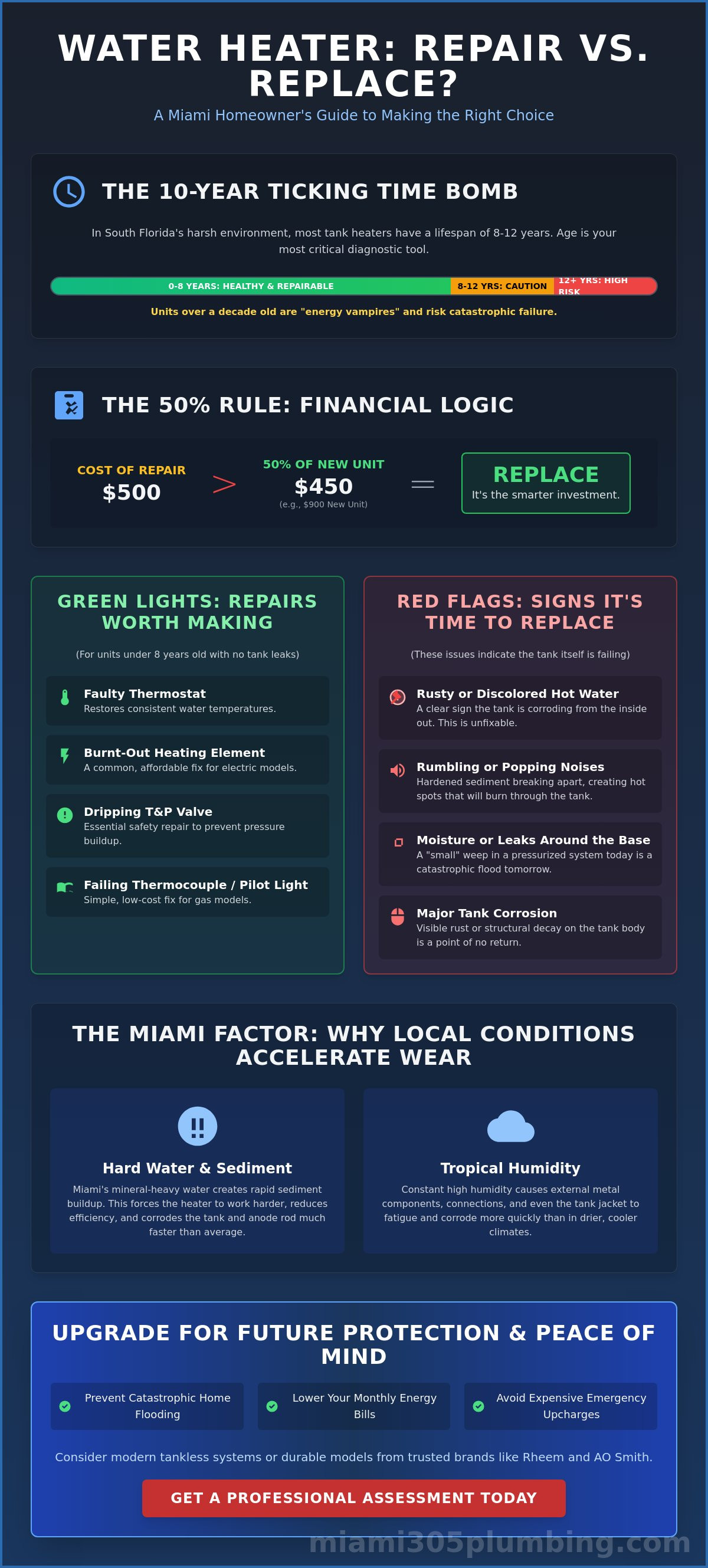
- Use the 10-year age benchmark as your first diagnostic tool to determine if your tank is a ticking time bomb or just needs a minor tune-up.
- Master the 50% Rule to simplify the repair vs replace water heater dilemma by comparing current fix costs against the price of a new, high-efficiency unit.
- Understand how Miami’s mineral-heavy hard water and tropical humidity accelerate sediment buildup and wear out your anode rod faster than average.
- Identify which specific components, such as heating elements or thermostats, are worth fixing on younger units to avoid the cost of an unnecessary full replacement.
- Discover why upgrading to modern tankless systems or durable models from Rheem and AO Smith can provide long-term protection against catastrophic home flooding.
Repair vs. Replace Water Heater: Spotting the Warning Signs
Are you seeing a puddle under your tank? Is your morning shower suddenly lukewarm? You're facing the classic homeowner's dilemma: do you pay for a quick fix or invest in a brand new unit? Balancing immediate repair costs against long-term reliability is tricky. If you choose wrong, you risk a flooded garage or a massive utility bill. The decision to repair vs replace water heater systems often comes down to timing and safety. Understanding How Water Heaters Work helps you see that some issues are just surface-level. A loose valve is an easy afternoon repair. However, a structural crack in the tank is a different story. That’s a ticking time bomb.
Performance issues often signal internal decay. If your water temperatures are inconsistent, your heating elements might be failing. In Miami, this is often caused by sediment buildup from our hard water. You need to decide: is this a one-time part replacement or the start of a total system collapse? The 10-year benchmark is your most critical diagnostic tool. Most traditional tank heaters in South Florida only last 8 to 12 years because of the harsh environment. If your unit is approaching that double-digit birthday, your choice to repair vs replace water heater equipment becomes much simpler.
The Telltale Signs of a Failing Unit
Look for these red flags before you call for water leak detection in Miami. Visual cues can tell you exactly what's happening inside that steel drum. Don't ignore the small things.
- Rusty Water: If your hot water looks discolored but the cold stays clear, your tank is corroding from the inside out. This isn't fixable.
- Popping Noises: That rumbling sound is hardened sediment breaking apart. It creates hot spots that eventually burn through the tank wall.
- Moisture or Pooling: Never ignore a "small" damp spot. In a pressurized system, a tiny weep today becomes a catastrophic burst tomorrow.
When Age Becomes the Deciding Factor
Why does age matter so much in 2026? Technology has moved fast. A unit installed in 2015 is an energy vampire compared to modern high-efficiency models. Older tanks struggle with Miami’s peak usage demands and tropical humidity. This environment causes metal to fatigue faster than in cooler climates. If your unit is over a decade old, you're likely facing "catastrophic failure" soon. Don't wait for a weekend emergency. A proactive water heater installation in Miami protects your home and your wallet from the high costs of a sudden flood. It gives you the chance to choose the best model rather than taking whatever is on the truck during a midnight crisis.
When a Quick Fix Works vs. The Point of No Return
Is it a minor part failure or a total system collapse? Knowing the difference is the first step in the repair vs replace water heater decision. External components are designed to be replaced. Things like valves, thermostats, and heating elements often fail long before the tank does. If your unit is relatively young, these are high-value fixes that extend its life. However, internal tank damage is a different story. Once the steel drum itself starts to fail, there's no permanent fix. You're simply managing a crisis until the water hits your floor.
Safety is your absolute priority. If you detect a sulfur smell or see scorched electrical connections, shut the system down immediately. Gas and electrical issues aren't just plumbing problems; they're fire and explosion hazards. These situations require an expert who specializes in gas line installation and replacement in Miami. Don't risk your home for a DIY project. Professional intervention ensures that your fuel lines and high-voltage connections meet local safety codes.
Common Repairs Worth Making
If your tank is dry and under eight years old, focus on the "Repairable List." Swapping a faulty thermostat or a burnt-out heating element in an electric unit is a routine task. It restores consistent temperatures without the cost of a full install. You should also watch the Temperature and Pressure (T&P) relief valve. If it's dripping, replace it immediately to prevent dangerous pressure buildup. For older gas models, a failing thermocouple or a clogged pilot light is usually a simple fix. These components are affordable and keep your system running safely. If you're unsure about the state of your unit, you can always ask a local pro for an honest assessment of your system's health.
Signs of a Fatal Tank Failure
Some issues land directly on the "Fatal List." Corrosion on the bottom of the tank is a major red flag. This indicates the internal lining has breached, and the steel is rotting. It's a "ticking time bomb" scenario. Heavy sediment buildup also causes the tank to overheat, leading to structural cracks that can't be welded. If you notice frequent "minor" leaks from the tank body, the metal has thinned significantly. At this point, patching is useless. It's much smarter to transition to energy-efficient modern solutions that offer better reliability and lower monthly costs. Investing in a new unit now prevents the massive cleanup costs of a sudden tank burst.
The 50% Rule: Calculating the Financial Logic of Replacement
Are you stuck staring at a repair estimate, wondering if it's a smart fix or a waste of cash? Most homeowners feel the same pressure when a unit starts acting up. You don't want to overspend on a replacement, but you also don't want to pay for a repair that only buys you a few more months. This is where the 50% Rule comes in. It provides a clear, objective framework for the repair vs replace water heater debate. If the cost of your repair exceeds half the price of a brand-new unit, you should almost always choose the replacement. This logic is especially true for tanks that are already past their eight-year mark.
You must also account for the "Frequency Tax." This is the hidden financial drain of making multiple small repairs over a single year. One service call for a thermostat might seem affordable. However, if you're calling for emergency plumbing in Miami three times in eighteen months, you've likely paid for a significant portion of a new unit without getting the benefits of one. A new installation resets the clock on your home's reliability. It moves you from a state of constant crisis management to long-term peace of mind.
The Math Behind the Decision
The 50% Rule is the industry standard because it accounts for the diminishing returns of aging machinery. When you compare a major repair to a fresh water heater installation in Miami, look at the "cost per year of life." A repair might cost a few hundred dollars but only guarantee another year of operation. A new unit, however, spreads its cost over a decade or more of service. Furthermore, consider the warranty. Most repairs only come with a 30 to 90-day guarantee on the specific part. A new 2026 model typically carries a 6 to 10-year manufacturer warranty, protecting you from future out-of-pocket expenses.
Hidden Costs of Staying with an Old Unit
Old units do more than just break down; they actively drain your bank account. Sediment-crusted heating elements require significantly more energy to reach the same temperature, driving up your monthly utility bills. For large South Florida families, an aging unit also suffers from poor "recovery time," meaning the second person in the shower is likely getting a cold surprise. Beyond the bills, there's the risk of water damage. A tank burst in a Miami home can lead to massive insurance deductibles and weeks of mold remediation. Upgrading to a modern, high-efficiency unit isn't just about hot water. It's an investment in protecting your property's value and your daily comfort.
Miami’s Impact on Your Unit: Hard Water and Tropical Humidity
Miami’s environment is uniquely aggressive toward home appliances. Between the mineral-heavy water supply and the relentless tropical humidity, your tank is under constant attack. If you live in South Florida, the repair vs replace water heater decision isn't just about the unit's age. It's about how well it has survived local conditions. Our water contains high levels of calcium and magnesium. These minerals don't just stay in the water; they settle as rock-hard sediment at the bottom of your tank. This buildup forces your unit to work twice as hard. It leads to early burnout and higher utility bills.
The anode rod is another critical factor. This sacrificial component is designed to rust so your tank doesn't. In Miami, the high mineral content causes these rods to dissolve much faster than the national average. If you don't replace the rod every two to three years, the minerals will start eating the tank walls. By the time you see a leak, the damage is usually terminal. You're no longer looking at a simple part swap. You're looking at a full system failure that could have been avoided with a simple rod replacement.
Sediment: The Silent Killer of Miami Heaters
In neighborhoods like Coral Gables or Pinecrest, flushing your tank is a non-negotiable maintenance task. If you skip this, sediment acts as a thick layer of insulation between the burner and the water. The tank bottom gets incredibly hot. This causes the metal to fatigue and eventually crack. This isn't just a heater issue; it's a whole-home plumbing concern. If you're noticing slow drains along with your lukewarm water, you might need professional drain cleaning in Miami to clear out mineral deposits that have moved through your pipes. Keeping your lines clear helps maintain the overall health of your water heating system.
Protecting Your Investment in the Tropics
Most Miami homes have water heaters located in garages or outdoor closets. In Kendall, these spaces become high-humidity saunas. This moisture causes the exterior casing to rust. It can hide developing leaks or damage sensitive electrical components. Miami-Dade building codes also require specific safety measures. These include thermal expansion tanks and proper elevation requirements. These codes protect your home from pressure spikes common in closed plumbing systems. If your unit is older, consider scheduling water leak detection in Miami to catch small drips before they destroy your drywall. Catching a leak early is the only way to avoid a total home flood. Contact our local Miami team today to ensure your unit meets current safety standards and is protected from the elements.
Upgrading for the Future: Modern Solutions for Miami Homes
When you move past the initial stress of a failing unit, you see an opportunity to modernize your home. The decision to repair vs replace water heater equipment shouldn't happen while you're standing in an inch of water in your garage. Modern units are built for the specific challenges of the South Florida climate. Brands like AO Smith and Rheem have engineered models with enhanced internal coatings and more durable anode rods. These features are designed to fight back against the aggressive mineral content in our local water supply. Choosing a high-durability model today means you won't be revisiting this crisis in another five years.
In neighborhoods like Miami Shores and Coconut Grove, where historic homes often have tight utility closets or limited laundry room space, compact upgrades are game changers. Moving away from a bulky 50-gallon tank can free up valuable square footage for your next renovation. A professional assessment can help you determine if your current footprint can support a more efficient system. Making the right choice now ensures your home meets 2026 energy standards while providing the reliability your family needs for daily life.
Tankless vs. High-Efficiency Tank Units
Unlimited hot water is the ultimate luxury for large Miami families. Tankless water heaters provide this by heating water on demand rather than storing it. This shift eliminates the risk of a massive tank burst and flood. However, these units often require a specialized gas line installation and replacement in Miami to handle the higher BTU requirements. If you live in a high-rise condo, a high-efficiency electric tank might still be your best bet due to venting constraints. Single-family homes, however, have the flexibility to choose the system that offers the best long-term utility savings. We can help you weigh the upfront installation needs against the monthly energy reduction.
Taking Action Before the Flood
Proactive replacement is always more affordable than a midnight call to an emergency plumber in Miami. When you schedule a planned water heater installation in Miami, you have the time to compare models and secure the best warranty. Waiting for a catastrophic failure usually means you have to take whatever unit is available on the truck. Use this final checklist to make your move: Is the unit over 10 years old? Does the repair quote exceed 50% of a new unit's price? Has the reliability been inconsistent lately? If the answer to any of these is yes, it's time to stop repairing and start upgrading. Protect your home and your peace of mind by making the call before the next leak starts.
Secure Your Home’s Hot Water and Safety
Deciding whether to repair vs replace water heater units doesn't have to be a gamble. Keep the 50% Rule in mind: if a fix costs half the price of a new unit, an upgrade is the smarter financial move. Miami’s hard water is notoriously aggressive, so don't wait for a catastrophic burst to protect your property. A proactive switch to a modern, high-efficiency system prevents the stress of a flooded garage and lowers your monthly energy bills.
Our team brings over 20 years of combined local experience to every home in Miami-Dade. We specialize in expert AO Smith and Rheem installations, ensuring your new system is perfectly calibrated for South Florida conditions. Because plumbing crises never happen at a convenient time, we provide 24/7 emergency response to keep your family comfortable. You'll always receive professional reassurance and a human connection when you call us.
Don't let a small leak turn into an expensive weekend emergency. Get a Professional Water Heater Assessment Today and rest easy knowing your hot water is reliable. We're ready to help you make the best decision for your home and your budget.
Frequently Asked Questions
How long do water heaters typically last in Miami homes?
Traditional tank water heaters in South Florida typically last between 8 and 12 years. The combination of mineral-heavy hard water and high tropical humidity often causes units to fail sooner than the national average. Tankless models are more durable and can last up to 20 years with consistent maintenance.
Is it worth repairing a water heater that is 12 years old?
No, it's rarely worth the investment at this age. A 12-year-old unit has reached the end of its reliable life cycle in the Miami climate. Even a successful repair often precedes a catastrophic tank failure, making replacement the safer and more cost-effective choice for your home.
How much does it cost to replace a water heater compared to a major repair?
Follow the industry-standard 50% Rule to make your decision. If a professional repair estimate exceeds half the price of a new installation, you're better off investing in a fresh unit. This helps you avoid the "frequency tax" of paying for multiple service calls on a failing system while deciding whether to repair vs replace water heater equipment.
What are the signs that my water heater is about to burst?
Watch for active pooling water, heavy rust around the bottom of the tank, or loud rumbling and popping noises. These sounds mean sediment has hardened and is causing the tank to overheat and crack. If you notice moisture under your unit, shut off the water supply immediately to prevent a flood.
Can hard water in South Florida cause my water heater to fail early?
Yes, Miami's hard water contains high levels of calcium and magnesium that settle as sediment. This buildup acts as an insulator, forcing the burner to work harder and eventually burning through the tank wall. Regular flushing is essential to prevent this mineral damage from shortening your unit's lifespan.
Should I switch to a tankless water heater when my current tank dies?
Switching is a great move if you want endless hot water and more storage space. Tankless units are ideal for Miami renovations because they eliminate the risk of a massive tank burst. They also offer better energy efficiency, though they may require an upgrade to your gas or electrical lines.
Will my homeowners insurance cover a water heater replacement?
Most standard policies cover the damage caused by a leaking tank but won't pay for the new unit itself. Insurance companies generally view the unit as a maintenance item rather than a covered peril. Review your policy for specific riders that might include mechanical breakdown coverage for home appliances.
How do I know if my heating element is bad or if I need a new tank?
A bad heating element usually causes lukewarm water or a very slow recovery time after someone showers. If the tank is leaking, rusting, or showing external corrosion, the problem is structural and requires a new tank. Use these signs to guide your repair vs replace water heater decision before a minor issue becomes a major flood.


0 Comments